property
The Tipping Point: Jordaan Suburbs Where Buying Has Become Cheaper Than Renting
A shift in the local affordability calculus is pushing first-time buyers to reconsider the maths, and some neighbourhoods are now firmly on their side.
How we reported this
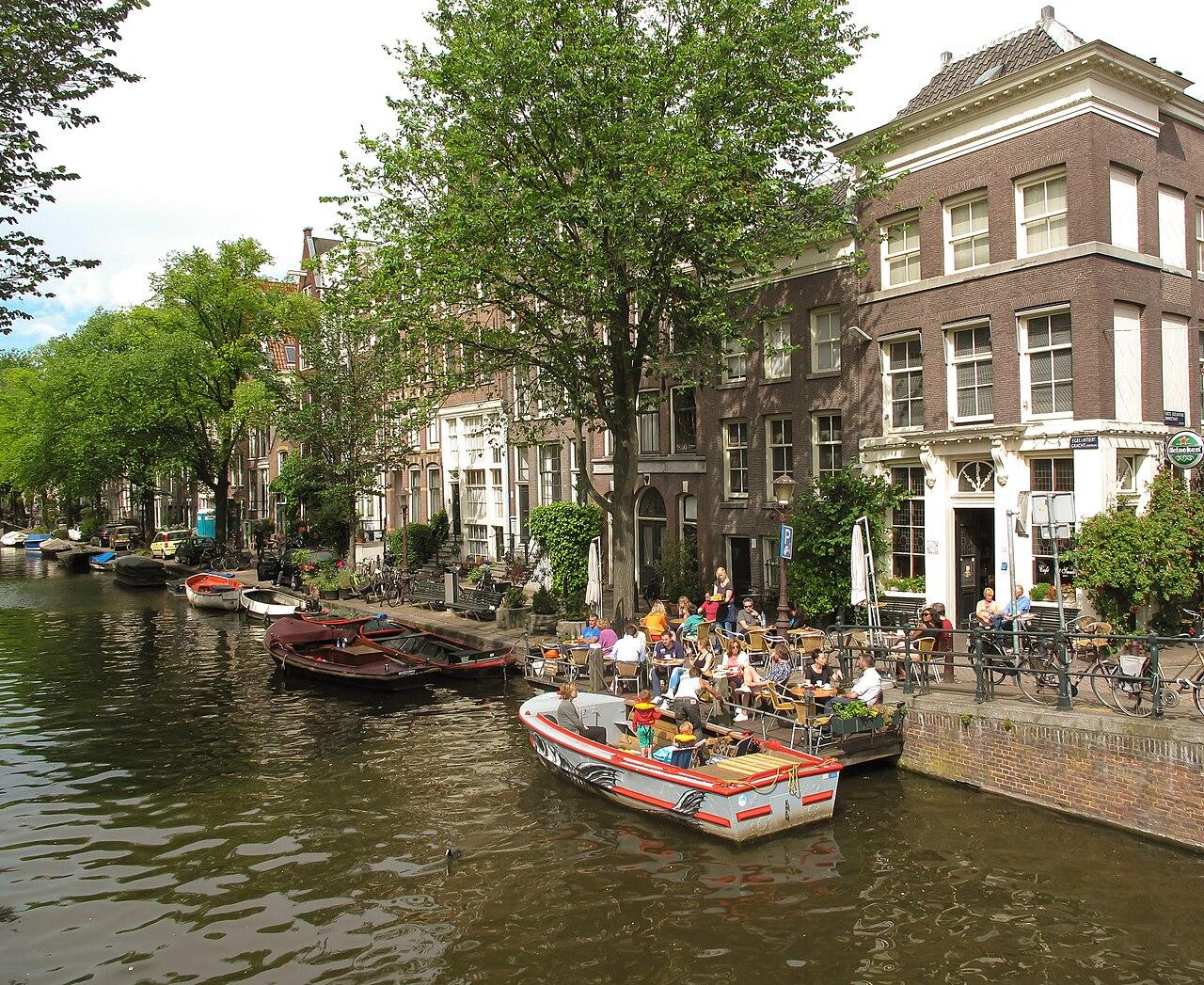
For the first time in nearly a decade, monthly mortgage costs in several of Jordaan's outer residential pockets have fallen below prevailing rental prices, according to broker data compiled through the end of Q2 2026. The gap is not marginal. In streets like Haarlemmerdijk and the quieter stretches of the Westerpark district, a two-bedroom apartment that commands €2,100 per month from a landlord can now be financed at a fixed monthly repayment of roughly €1,850, assuming a 20 percent deposit and a 30-year term at current Dutch lending rates.
This matters right now for a specific reason: European Central Bank rate adjustments in late 2025 nudged fixed mortgage rates downward, settling around 3.8 percent by April 2026. At the same time, Amsterdam's rental market has continued its structural upward march, with mid-market two-bedroom units across the Jordaan and its adjacent neighbourhoods pushing through the €2,000 floor that analysts had long treated as a psychological ceiling. The two lines have crossed.
The practical consequence is that the rent-versus-buy equation, long a source of despair for anyone under 35 without family capital behind them, has quietly flipped in certain postcodes. Not everywhere, central Jordaan canal-side properties still demand purchase prices that stretch well beyond what rent savings can justify in any near-term horizon. But move west toward the Frederik Hendrikbuurt or north along the Nassaukade corridor, and the arithmetic starts to work differently.
Where the Numbers Land
Westerpark is the clearest example. Apartments in the blocks between Haarlemmerweg and the park itself have been selling at between €425,000 and €480,000 for a solid two-bedroom since January 2026, according to listings tracked on Funda. At those prices, a buyer putting down €90,000, not a trivial sum, but achievable for dual-income households who have been saving through the rental years, walks into monthly costs that undercut what the same property would lease for. The NVM, the Dutch association of real estate brokers, reported in its Q1 2026 bulletin that transaction volumes in the broader Amsterdam West corridor rose 14 percent year-on-year, suggesting buyers are already acting on this logic.
The Jordaan Housing Cooperative, a community lending initiative that has been operating out of offices near the Noordermarkt since 2022, has seen application volumes climb steadily through the first half of this year. The cooperative pools resources to help residents with moderate incomes access purchase financing that conventional banks structure unfavourably. It is not a substitute for a full mortgage, but for buyers who are close to the affordability threshold, it has become a meaningful bridge. Similarly, the gemeente Amsterdam's Koopgarant scheme, which allows buyers to purchase at a discount in exchange for sharing future appreciation with the municipality, has active listings in the Bos en Lommer area immediately west of the Jordaan boundary, bringing effective purchase prices meaningfully lower than open-market equivalents.
What Buyers Should Do Next
The window may not stay open long. Several mortgage advisers operating on the Rozengracht have noted publicly that fixed rates could edge back upward if ECB policy tightens again in autumn 2026. Meanwhile, rental supply in Jordaan and Westerpark remains critically constrained, fewer than 200 private-sector rental units were available across both neighbourhoods as of late June, according to Pararius listings data, which means rents are unlikely to soften and relieve pressure from the other side.
For prospective buyers, the practical advice is to move quickly on pre-approval and to focus search efforts specifically on the Frederikbuurt, Westerpark, and lower Nassaukade stretches where the purchase-to-rent differential is most pronounced. A standard notary fee in the Netherlands runs around 1 to 2 percent of the property value, and transfer tax for primary residences under 35 remains waived under the national starter exemption introduced in 2021, a meaningful cost reduction that keeps the upfront burden lower than it first appears.
The Jordaan has always been a market where timing looks obvious only in hindsight. Right now, on these specific streets, the numbers are unusually legible.
This article is general information only and is not personal financial or investment advice. Consider your own circumstances and seek licensed professional advice before making financial decisions.